
Back to Testimonials
SURVIVOR
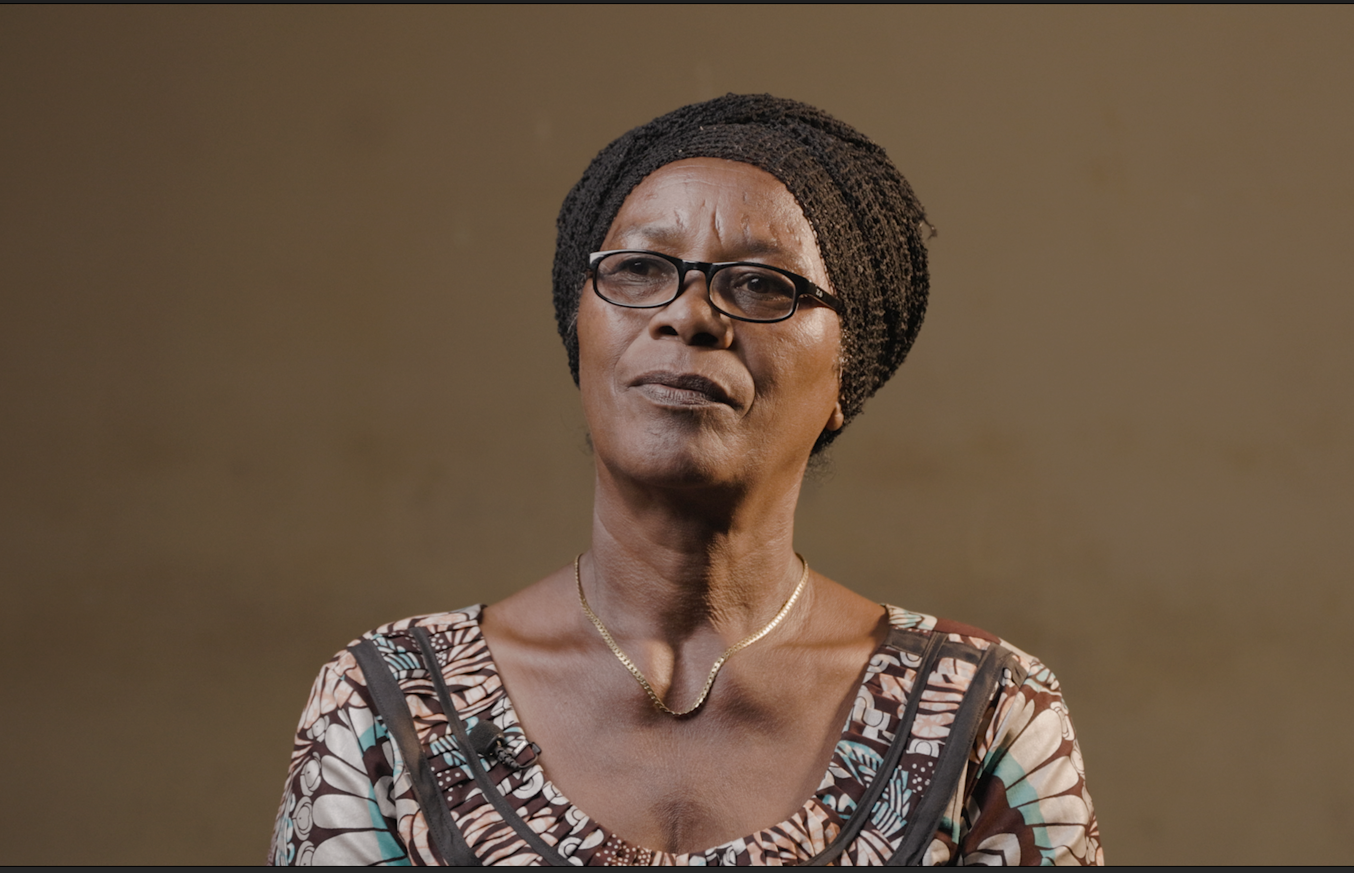
Bamurange Bernadette
GISAGARA
|
March 25, 2026
Bamurange Bernadette is a survivor of the 1994 Genocide against the Tutsi who lost her husband and all three children. After enduring extreme violence and betrayal, she survived against all odds. Today, she lives with strength and dignity, rebuilding her life step by step despite her painful past.
Full Testimonial
My name is Bamurange Bernadette. I was born in 1963 in the Southern Province of Rwanda, in Gisagara District.
Before the genocide, I was married and had three children. During the 1994 Genocide against the Tutsi, all my three children were killed. I was left alone.
Today, I live in the Southern Province, in Ruhango District, Kinazi Sector, Rutabo Cell, Nyarugunga Village.
Before the Genocide
I was born in Gisagara, but my family did not originally come from there.
My father had been chased away from his home. His house was destroyed, and he fled to this region, in Mayaga, around Rutabo. This happened around the 1960s, as we were told, because I was not yet born.
He used to tell us that people had tried to kill him. They had even taken him to Karubanda to execute him, but a white missionary priest intervened and saved his life.
That is how our family came to settle here.
Later, in the 1990s, violence returned again. My paternal uncle, who lived in Bugesera, in Gakamba, was killed. That was another sign that things were becoming dangerous again.
As for me, I got married in 1989, in Gisare. I had found a husband, and we started a life together. By the time the genocide began, I already had three children.
When the situation became dangerous, I fled with my baby, and we came to take refuge here.
During the Genocide
At first, we stayed at the commune, thinking we would be protected. But after a few days, they forced us to leave. We fled again, but when we reached Ntongwe, we were turned away.
I returned to the place where I was married, but I found our house burned. My husband was still alive, but we had been separated in the chaos.
I then went to the home of my sister-in-law’s husband. He agreed to hide me. But it was not out of kindness.
He kept me hidden, but he treated me like his wife, even though my own husband was still alive. My husband would come secretly at night. They would give him food, and he would go back into hiding in the forest.
One day, they caught him. They killed him.
After my husband was killed, my children were also targeted. They accused our family of hiding “Inyenzi,” as they called Tutsi or rebels.
The man who had been hiding us betrayed us. They gathered us together and took us to abandoned houses — ruins where they had already killed others.
There, I watched as my children were beaten in front of my eyes. Then they threw them into a latrine.
All of them.
I was there, powerless, watching everything. Then they turned on me. They beat me severely. They cut me behind my right ear, and they struck me on my back. I fell down and lay there like someone who was already dead.
Between Death and Survival
Later, the same man found me again. I had no strength left. I begged him: “Please, have mercy on me. Kill me too. I have suffered enough.”
He answered: “You are already dead. This is not a good death.” He forced me to stand up, but I could not walk because of the pain in my back. I tried to move, falling again and again.
At one point, I stayed at his home. His wife, who was a Tutsi, helped me secretly. She treated my wounds and gave me some care. They hid me under a rock.
But people began to suspect him. They came asking: “Has he hidden someone here?” He forced me to come out.
Outside, people wanted to kill me, but he begged them to let me go. He told them: “There is no ethnicity for a girl.”
They demanded money.
He gave them what he could — even taking from what I had. Everything else had already been looted. That is how I remained there, and that is how I survived.
After the Genocide
After everything, I developed severe trauma. If someone greeted me, I would run away immediately and hide inside the house.
I was always crying. It felt like I was drowning in tears. One day, a priest came — I think he was from Cyangugu. He was looking for survivors.
We went with him to Ruhango. He helped us get a loan of 80,000 francs and even stood as our guarantor.
That money helped me start again.
I asked myself:“If I stay like this, what will become of me?” I decided to rebuild my life.
Later, I received support from IBUKA — 30,000 francs. I used it wisely. I told myself:
“Even if I have no children, no family, I must at least have a home.”
“Even if I have no children, no family, I must at least have a home.”
I used that money to build.
I started small businesses — buying sorghum, selling seeds. Later, I received support from FARG, and I invested it carefully. I worked hard. I built a small house — one room and a living room — along the road. I even put cement on the floor.
Today, I live in that house.
Healing and Strength
There was a time when no one came near me.
People avoided me. I lived like a wild person, isolated and alone.
When sadness came, I would lock myself inside and stay there for days, just listening to the radio.
I did not want to see anyone.
But today, things have changed. I welcome people. I interact with others. I have rebuilt my life step by step.
If you came to my home today, you might think I had a husband who supported me.
But no.
I survived.
I suffered.
This is my life.
Today
Today, I stand as a survivor.
I lost my husband. I lost my children. I lost everything.
But I rebuilt myself.
I am strong.
And I continue to live.
Comments (0)
No comments yet. Be the first to share your thoughts!
Leave a Comment
Actions
Information
Name
Bamurange Bernadette
Location
GISAGARA
Date
March 25, 2026
Category
SURVIVORShare Your Story
Your story matters. Help preserve history by sharing your testimonial.
Share Your Testimonial